Passport rankings answer one question: which passports travel best. They do not answer the question that follows, which is how a person who holds a weaker passport comes to hold a stronger one. There are four legal routes, and none of them is a purchase. Citizenship by descent recovers a nationality a family already had. Naturalisation earns one after years of residence. Citizenship by investment grants one in months in exchange for a contribution to a small state. And residence by investment opens a door to naturalisation in a larger one. Each route is set out below: what it costs, how long it takes, and which passports it can realistically lead to.
At a glance
- Nobody can buy a top-ten passport in 2026. Malta, the only EU state that sold citizenship directly, closed its program after the European Court of Justice ruling of April 2025.
- Citizenship by descent is the fastest route to a top-tier passport for those who qualify: typically twelve to twenty four months, at legal and documentation cost only.
- Naturalisation through a residence-by-investment program leads to EU citizenship after seven years in Greece and ten in Portugal (seven for CPLP nationals) under the rules in force from May 2026. • Citizenship by investment grants a Caribbean passport in four to nine months from US$230,000, or Turkish citizenship in around six months for a US$400,000 property purchase.
- Whether a second passport can be held at all depends on the applicant's current nationality; India, Indonesia, China and several other countries do not permit it.
Why can a strong passport not simply be bought?
Because the states whose passports rank highest do not sell them. The European Union has treated citizenship sales as incompatible with membership since the Court of Justice ruled against Malta's program in April 2025; Cyprus closed its scheme in 2020. What remains for sale is citizenship of small states outside the EU, whose passports rank in the middle of the tables: strong for Schengen and Commonwealth travel, weak for the United States. A passport at the very top of the rankings is therefore earned through ancestry or residence, and the starting point for anyone reading a ranking is to ask which of the two they can access.
Route one: citizenship by descent
If a parent or grandparent held citizenship of a country that recognises descent, the applicant may already be a citizen who has not yet documented it. Ireland (a grandparent born in Ireland), Poland, Hungary, Greece and several Latin American states offer routes of this kind, and each leads to a passport in the top tier of the rankings. Italy, historically the most generous, restricted its route to two generations by law in May 2025, and applications now depend on where the applicant's ancestor was born and when.
Descent is cheap and, when the paperwork exists, fast. Its weakness is that the paperwork often does not exist, and that it requires an ancestor in the right place at the right time. Passport Legacy's article on citizenship by descent sets out the eligibility tests country by country.
Route two: naturalisation after residence
Every strong-passport country naturalises long-term residents. The residence-by-investment programs exist because they provide the residence permit that starts the clock without requiring the applicant to be employed or to live in the country full time. Greece grants a five-year renewable residence permit for a property investment from €250,000 in conversions to €800,000 in the most demanded areas, and naturalises after seven years of residence with language and integration tests. Portugal grants residence for a €500,000 investment in a qualifying fund, with seven days a year of presence, and naturalises after ten years under the law that took effect in May 2026, or seven for nationals of Portuguese-speaking countries. Both lead to an EU passport ranked among the strongest in the world.
The trade is time for quality. An investor who starts in 2026 holds an EU passport in the early to mid 2030s, and holds EU residence, with Schengen freedom of movement, from the first year.
Route three: citizenship by investment
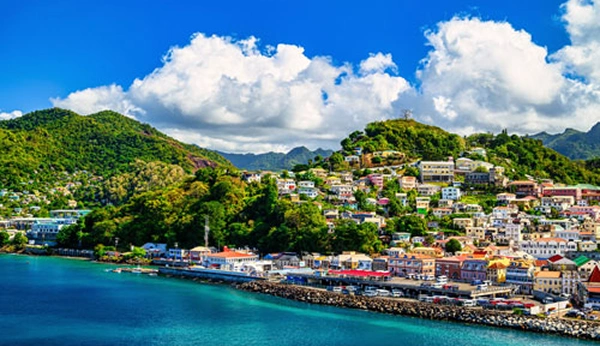
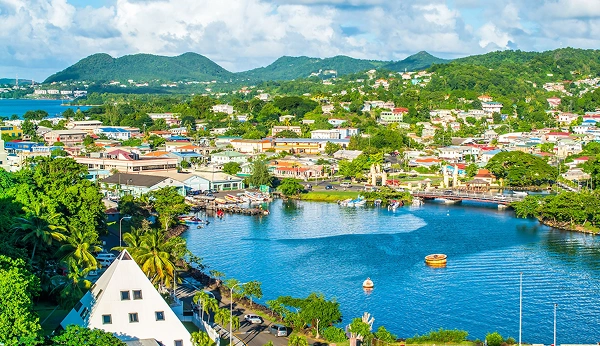
For an applicant who needs a second passport within a year, the Caribbean programs are the only credible option. St Kitts and Nevis, Grenada, St Lucia and Antigua and Barbuda grant citizenship in four to nine months for contributions from US$230,000 to US$250,000, plus fees, with interviews for all adults and, from September 2026, a shared regional regulator. Türkiye grants citizenship in roughly six months for a US$400,000 property purchase held for three years, with the advantage of a larger economy and the disadvantage of no visa-free access to the Schengen area.
These passports sit in the middle of the rankings. What they provide is a second nationality, a second travel document, and for some holders a route to further options: Grenadian citizenship, for example, supports an application for the United States E-2 investor visa after three years of domicile.
Route four: residence that becomes a base, not a passport
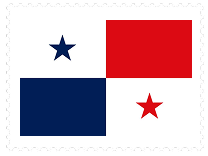
Some of the most valuable programs never lead to citizenship at all. The United Arab Emirates Golden Visa grants ten years of residence for an AED 2 million investment with no naturalisation path. Panama grants permanent residence in a month. Thailand's Privilege and Long-Term Resident visas grant years of residence with no path to a passport. For an applicant whose aim is tax residence, a safe base, or freedom to live somewhere specific, these can be better answers than a passport, and they are often combined with a Caribbean citizenship that provides the travel document.
Which route is right for a given person?
The decision turns on four facts: current nationality (which determines whether a second citizenship is permitted and which visas are needed), timeline (months or years), budget, and the real objective (travel, security, a base, tax, or all four). Passport Legacy's consultants work through those four facts in a first conversation and rule routes out before ruling any in. The passport rankings are a useful place to start that conversation; they are a poor place to end it.
Frequently asked questions
How long does it take to get a second passport?
From around four months for a Caribbean citizenship-by-investment application to ten years for naturalisation in Portugal. Descent applications typically take one to two years.
Can I hold two passports?
That depends on the applicant's current nationality. Most Western countries permit multiple nationality; India, Indonesia, China, Singapore and several others do not, and their citizens generally pursue residence rather than citizenship. Passport Legacy's guide to dual citizenship lists the position country by country.
Which is the cheapest strong passport?
Citizenship by descent, where available, costs only legal and documentation fees. Among investment routes, Antigua and Barbuda's program has the lowest entry contribution at US$230,000, and Greece's golden visa offers the lowest entry point into an eventual EU citizenship at €250,000 for qualifying conversions.
Passport Legacy advises on all four routes, from descent applications to citizenship by investment, across more than twenty programs. To find out which route applies to a specific case, contact the team.






.webp)






















.webp)


.webp)










.webp)
.webp)



.webp)


















.webp)
.webp)