As of July 2026, a Caribbean second passport starts at approximately US$200,000 for a single applicant and US$230,000 to US$250,000 for a family of four, before fees. Add due diligence, government and professional fees and the realistic all-in cost is US$260,000 to US$290,000. Lower-cost programmes exist in the Pacific and Africa, with trade-offs in mobility.
At a glance
- Headline figures exclude fees. Expect the true cost to run 8% to 15% above the advertised minimum.
- Caribbean fund routes remain the mainstream option, clustered between US$200,000 and US$250,000.
- Property routes cost more up front but return capital after a holding period, typically five years.
- Vanuatu, Nauru and São Tomé & Príncipe sit below US$200,000 all-in, with weaker travel documents.
- Grenada and Türkiye are chosen for one reason above all: access to the US E-2 treaty investor visa.
What does a second passport actually cost in 2026?
There are three price tiers. Caribbean fund contributions run from US$200,000 to US$250,000 and buy a mature, well-recognised travel document. Pacific and African programmes sit between roughly US$95,000 and US$195,000 all-in and buy a narrower one. Türkiye's real estate route requires US$400,000, but the capital is invested rather than donated.
Family size moves the number most. Most Caribbean programmes price a family of up to four at a flat rate, so a single applicant pays disproportionately more per person. If you intend to include a spouse and children, apply together rather than sequentially.
What is included in the headline price, and what is not?
This is where most published comparisons mislead. The advertised figure is the contribution alone. Total cost of ownership is the sum of every mandatory payment required to hold a passport in your hand - and it is meaningfully higher. A complete budget has six components.
- Government contribution or qualifying investment - the headline figure, non-refundable in fund routes and recoverable in property and bond routes after the holding period.
- Due diligence fees - per applicant and non-refundable even if declined. Typically US$5,000 to US$10,000 for the main applicant and US$4,000 to US$7,500 per dependant aged 16 or over; younger children are usually exempt.
- Government and processing fees - application, processing and, in some programmes, interview fees, per person.
- Passport and naturalisation certificate fees - modest but per person, generally US$250 to US$500 each.
- Professional and agent fees - every programme requires a licensed agent. Budget US$20,000 to US$40,000.
- Ongoing costs - passport renewal every five to ten years, plus any holding-period obligations on property routes.
Property routes carry a further layer: purchase taxes, legal and transfer costs, maintenance, insurance and usually a higher government fee than the equivalent fund application.
How much does each programme cost in 2026?
The table shows the position as of July 2026. Fee schedules change without long notice, and every figure should be confirmed at the point of application.
| Country |
Route |
Minimum investment |
Est. fees for a family of four |
Total from |
Typical timeline |
| St. Kitts & Nevis |
Sustainable Island State Contribution |
US$250,000, up to four people |
approx US$20,000–25,000 |
approx US$270,000 |
4–6 months |
| Antigua & Barbuda |
National Development Fund |
US$230,000, up to four people |
US$20,000 processing plus US$17,500 due diligence |
approx US$267,500 |
6–9 months |
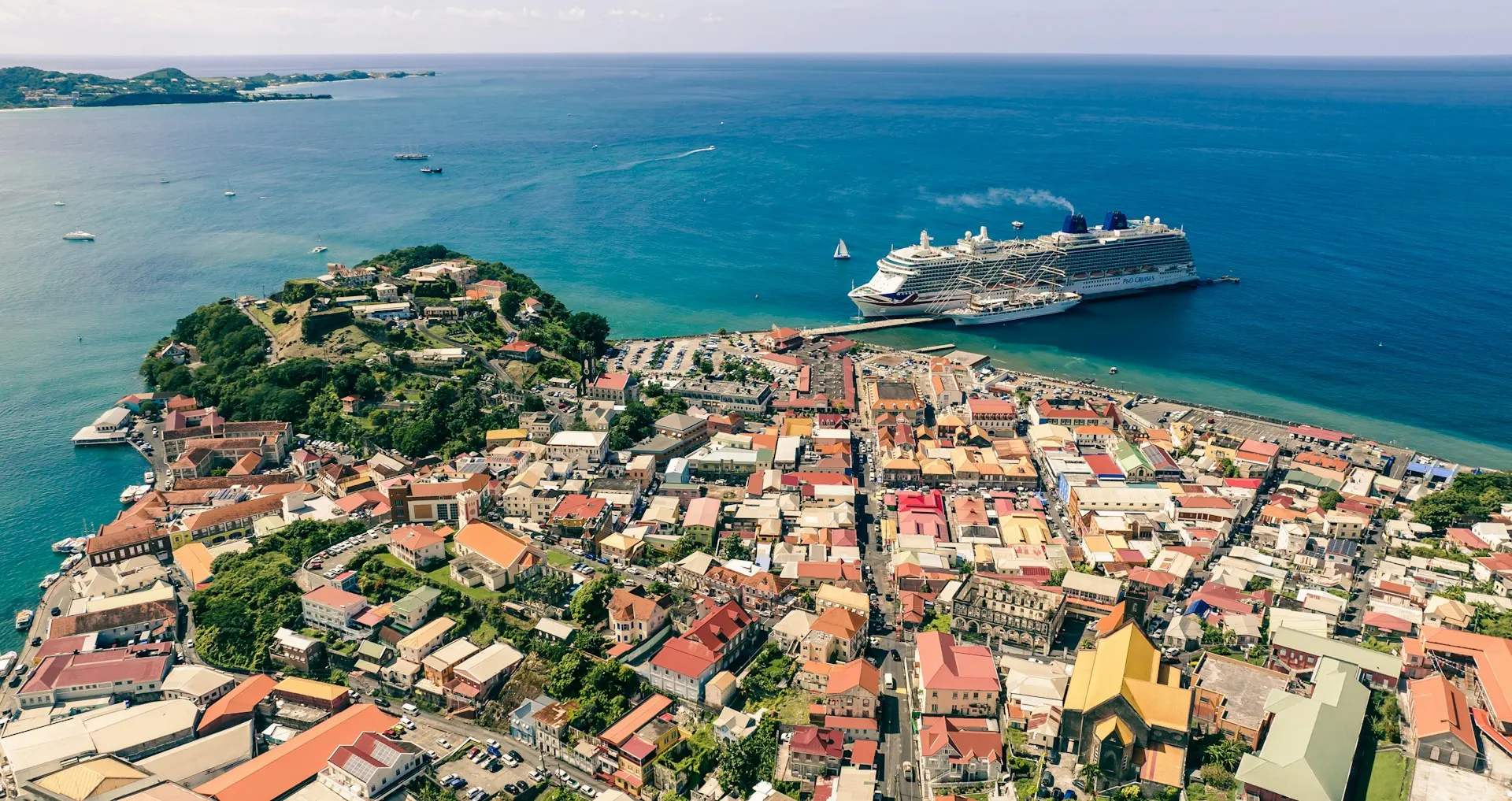
| Grenada |
National Transformation Fund |
US$235,000, up to four people |
approx US$29,000 |
approx US$264,000 |
approx 7 months |
| St. Lucia |
National Economic Fund |
US$240,000, main applicant plus three dependants |
approx US$20,000–30,000 |
approx US$265,000 |
6–12 months |
| Vanuatu |
Development Support Programme |
from US$130,000 single |
shown in total |
approx US$195,000 all-in |
2–3 months |
| Naoero |
Treasury Fund contribution |
from approx US$90,000, rate in force to 31 Dec 2026 |
approx US$13,000 single |
approx US$103,000 all-in, single |
3–4 months |
| São Tomé & Príncipe |
National Transformation Fund |
US$90,000 single; US$95,000 family of four |
varies by agent |
from approx US$95,000 |
5–7 months |
| Türkiye |
Real estate, three-year hold |
US$400,000 |
approx US$25,000–40,000 incl. taxes |
approx US$430,000 |
4–8 months |
All amounts exclude professional and agent fees, which apply in every case. Property and bond investments are recoverable after the holding period; fund contributions are not.
What does a family of four really pay?
Take Antigua & Barbuda as the clearest published example. A US$230,000 National Development Fund contribution for a family of four attracts US$20,000 in processing fees and US$17,500 in due diligence, giving US$267,500 before professional fees - 16% above the headline number.
Grenada prices the same family at US$235,000 plus roughly US$29,000 in fees. has the lowest single-applicant entry point at US$200,000, rising to US$250,000 for a family of four, with due diligence of US$7,500 for the main applicant and US$4,000 per dependant aged 16 or over.
St Kitts & Nevis contributes US$250,000 for up to four people but charges the region's highest due diligence - US$10,000 for the main applicant and US$7,500 per dependant aged 16 or over. St Lucia sits at US$240,000 with a comparable structure.
Across the five, budget US$260,000 to US$290,000 before agent fees and US$285,000 to US$325,000 including them.
How do residence programmes compare on price?
If the objective is a base rather than a passport, residence routes are often better in asset terms, because the capital is invested rather than donated.
- Greece - residential property from €250,000 for qualifying conversions and listed buildings, €400,000 in most regions and €800,000 in Athens, Thessaloniki and the larger islands.
- Portugal - €500,000 into a regulated investment fund, with a light physical presence requirement.
- Cyprus - €300,000 into property, company shares or fund units, plus a €50,000 annual income requirement.
- UAE - AED 2 million in property for the ten-year golden visa, with no donation element.
The trade-off is time and presence. Residence programmes take years to convert into citizenship, if they ever do, whereas a citizenship programme delivers a passport in months. They answer different questions, as our guide to citizenship and residency by investment countries in 2026 sets out.
Why do investors choose Grenada or Türkiye for the US E-2 visa?
Because both hold treaty status with the United States, allowing their citizens to apply for the E-2 treaty investor visa - a renewable route to live in the US while operating a business there. Nationals of India, China and many Gulf and African states are not eligible in their own right, so a treaty passport is the entry point.
One rule matters more than any other. Section 5902 of the National Defense Authorization Act, signed on 23 December 2022, requires an E-2 applicant who obtained treaty-country nationality through financial investment to have been domiciled in that country for a continuous period of at least three years before applying. Those who acquired nationality by birth, descent or marriage, and those previously granted E status, sit outside the rule.
Türkiye and Grenada therefore remain genuine E-2 routes, but not instant ones, and the interaction between the domicile test and each programme's structure is technical. Anyone buying a passport primarily for E-2 access should take US immigration counsel before committing.
Is the cheapest programme the right one?
Rarely. Price is the easiest variable to compare and the least predictive of outcome, and four factors matter more.
- Mobility - Vanuatu lost EU visa-free access when the European Council fully suspended its waiver with effect from 12 December 2024, and both Vanuatu and lost UK visa-free access in July 2023. Both remain useful documents; neither delivers European or British access.
- Programme durability - in June 2026 the European Commission wrote to the five Caribbean citizenship states seeking a phase-out by June 2028, with continued Schengen access as the stated stake. Nothing has taken effect and grandfathering is the norm, but the direction of travel should inform timing.
- Track record - São Tomé & Príncipe launched on 1 August 2025 under Decree Law No. 07/2025 and Nauru's programme dates from 2024. Both are legitimate and inexpensive; neither has the recognition record of a programme running since the 1980s.
- Due diligence risk - fees are non-refundable and a declined application in one jurisdiction is disclosable in others. Realistic pre-assessment beats a discount.
The right programme is the one that survives your actual use case - the border you cross most often, the family you must include, and the horizon over which it needs to work.
Frequently asked questions
What is the cheapest citizenship by investment programme in 2026?
As of July 2026, São Tomé & Príncipe and Nauru offer the lowest entry points, from approximately US$90,000 in contribution before fees. Among the established Caribbean programmes, is lowest at US$200,000 for a single applicant. Lower price consistently correlates with narrower visa-free access and a shorter operating history, so cost should never be the sole criterion.
Does the headline price include all fees?
No. Advertised figures are the contribution or investment only. Due diligence, processing, interview, passport and naturalisation certificate fees are charged separately and per person, and every programme requires a licensed agent whose fees are additional. Budget 8% to 15% above the headline figure in government fees, plus US$20,000 to US$40,000 professionally.
How much does a second passport cost for a family of four?
Across the five Caribbean programmes, a family of four should budget approximately US$260,000 to US$290,000 including government and due diligence fees, and US$285,000 to US$325,000 once professional fees are added, as of July 2026. Grenada is currently lowest at approximately US$264,000 before agent fees.
Is a property route cheaper than a donation route?
Not up front, but it can be over time. Property routes require a larger outlay and higher government fees, yet the capital is recoverable after the holding period, typically five years, whereas a fund contribution is permanent. Against that, weigh purchase taxes, legal costs, maintenance, currency risk and the possibility that resale proceeds fall short.
Can a second passport give me access to the United States?
Not directly, but Grenada and Türkiye hold E-2 treaty status, allowing their nationals to apply for the US treaty investor visa. Since 23 December 2022, applicants who obtained that nationality through financial investment must first show three continuous years of domicile in the treaty country. It is a real route, but it requires planning and specialist US immigration advice.
Speak to Passport Legacy
Budget is the right starting question, but the useful answer is a total cost of ownership figure built around your family composition, timeline and travel needs. Our advisers will model the all-in cost of the programmes that genuinely fit, including the fees most published comparisons omit. Contact us for a confidential consultation, or review our citizenship by investment programmes.





.webp)




















.webp)


.webp)











.webp)

















.webp)
.webp)