The sheer charm of Spain lures in visitors but also wins over residents as well. If you’ve been attracted to Spain for work, retirement, to be with family and friends, or because you love everything Spain has to offer, having Spanish permanent residency is undeniably an important milestone in many people’s lives. Permanent Residence gives you stability, legal rights, and you feel more than just a visitor or a temporary resident. In this blog, we will cover all the ways of getting permanent residency in Spain, including eligibility criteria, advantages and the complete process of how to make living in Spain a dream come true.
Types of Permanent Residency In Spain
1. Non-EU Citizens
Resource: myspainvisa.com
Non-EU citizens have multiple ways to gain permanent residency in Spain. These include:
1. Investment Visa
Getting permanent residency is possible if you invest money in a Spanish property or start working. Entrepreneurs willing to make a big impact on the Spanish economy will find this track appealing, as do investors.
2. Family Reunification
If some of your relatives are Spanish nationals or holders of permanent residence certificates in Spain, you could also apply for permanent residence in Spain as part of reunification with your family. It is preferred for many who want to be reunited with family.
3. Highly Qualified Professionals
Spain accepts experienced professions in line with their skilled workforce needs. If you have distinct experience or abilities, you might be qualified to become a resident in Australia.
2. EU Citizens
As for the citizens of EU countries, getting permanent residence in Spain is a pretty simple procedure. EU nationals can live and work in any EU member state, including Spain, without having to apply for specific residence permits. But they have to sign up themselves, and they have to fulfill certain conditions.
Requirements For Permanent Residency In Spain
Resource: myspainvisa.com
If you want to settle permanently in Spain, then there are certain conditions an applicant needs to meet. There are different requirements for Permanent Residency in Spain depending on what type of visa you’re applying for and if you’re an EU/Non-EU citizen. Here are the core criteria:
To take advantage of the benefits associated with Spain’s permanent resident status by 2023, an application must provide evidence of having lived legally in Spain for the last 5-year period. The proof will consist of various documents, among which we mention the following:
Current state of living (employment agreement, freelancing job, studying at university or in retirement).
The document attesting the registration to the address and a copy of the certificate from the Police Office of the jurisdiction’s place of residence.
A proof of residence in Spain (utility bill, lease contract).
proof you are self-sufficient with pay stubs/bank account info.
The permanent residence will be issued with help from the Immigration authorities in Spain by the Ministry of External Relations, according to the mentioned documents.
Other Requirements
Further prerequisites stipulate having a clean criminal record, not having sought voluntary repatriation to be relocated abroad for 5 years, and proof of residence in Spain during the previous 5 years. Proof of residency could consist of documents such as a rental contract or mortgage statement. In addition, you have proof of previous employment via tax filings and employment records.
Benefits of Getting Spanish Citizenship
There is no shortage of perks for naturalising as a Spanish citizen , all of which contribute to improving your daily living conditions in Spain and present fresh prospects further afield. Here are some of the key benefits:
1. Visa-Free Travel
Spanish passport holders benefit from visa-free or simpler visa entry conditions to most countries in the world. This makes travelling internationally easier for business or pleasure because there are fewer things to work around if needed. Spain frequently features at or near the top of ‘passport power’ rankings, meaning that Spanish nationals can travel freely to many places and don’t usually need pre-existing visas.
2. Public Education
In Spain, all nationals can attend free public education in primary and secondary schools or universities. This can be quite useful if you’ve kids or are likely to take more studies in Spain.
3. Healthcare Facilities
Spain’s state-of-the-art medical care is available to all Spanish nationals and is widely believed to be among the best in the world. Government health facilities offer free or very affordable medical services which will guarantee your right to quality healthcare for you and your family.
4. Right To Vote
Spanish law allows its people to take part in local and national polls. Thus, you can vote directly on governing matters and policies that impact your Spanish life.
4. Right To Work and Live
As a Spanish national, you have an unfettered right to residence and work within the European Union. This is a major advantage when looking for job opportunities and being eligible for EU social rights as well.
How to Get a Permanent Residency Card in Spain?
Resource: workstudyvisa.com
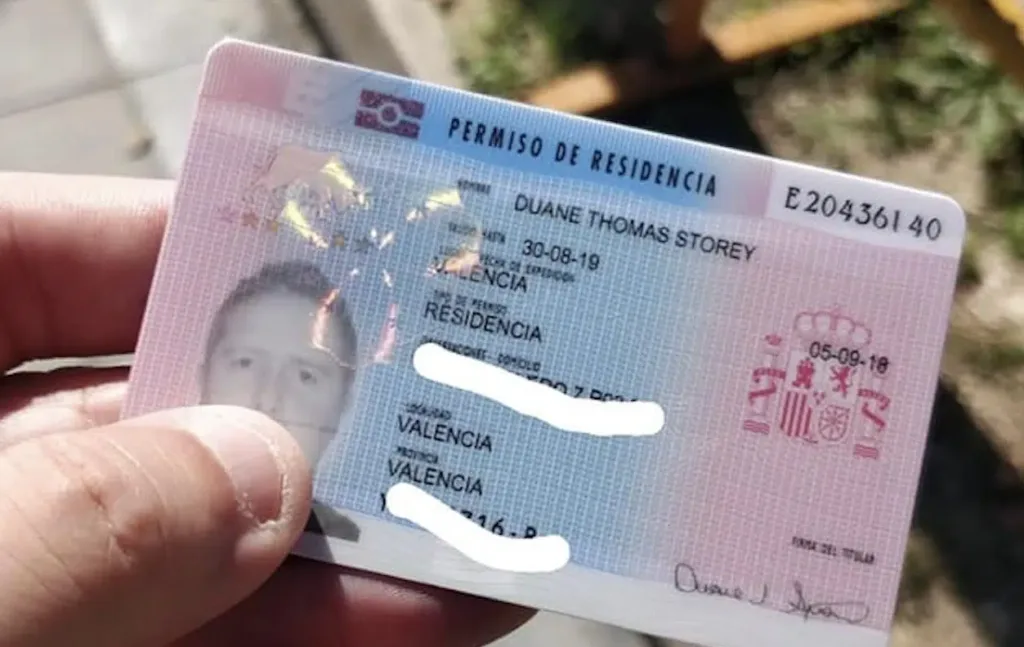
Follow the timeline of a person who just landed in the country with their first residence permit card. They receive their initial authorization, which is commonly known as a residence-work authorization, granting themlegal residency in Spain for one year along with the right to work. In this first-year period, however, they need to renew their permit and make sure they have a residence permit with which they can remain in Spain for the next two years. After finishing these two years of studies in Spain (which makes us three years altogether), they will then go through another revalidation, with this staying in the country for 2 more years.
The third renewal is also done after completing five years of stay in Spain, where you get your permanent residency card to complete your five-year journey.
Differences Between Permanent Residency and Spanish Citizenship
These two closely related residency types often cause people to conflate them. Both are legal options to explore after living in Spain for at least 5 years, allowing you to get legally employed (as an employee or self-employed job) and live there. (Both also grant unlimited time status).
However, the requirements and advantages differ significantly among them. The first option is where one can acquire a long-term residence without providing a minimum fund (i.e., under the ‘standard’ rules). You do not have to be currently employed to apply. The condition for you is to satisfy this option, and in this way, your application will be conceded for this permit.
On the other hand, to secure a long-term EU entry, you need proof of income, which has to be of your finances. To clarify, you should be employed (formal/informal), business, self-employed, or possess bank documents certifying having large sums of money in your account.
Permanent Residency in Spain for Non-EU Citizens
Spanish Residency application is easy and simple. The trick to all this is having insight into what each one entails and the obligations that come with them, after which, selecting the best one that suits your needs and those of your family. If you meet these requirements, your Spanish Resident Card awaits you.
So, let’s explore your options:
1. Student Visa
These residence permits are suitable for those who want to study or research in Spain. To study in Germany as an international student, you can apply for a visa to study undergraduate, Master’s, PhD, or other short-term courses in recognised institutions. There are two ways to initiate the application process:
You’ll need to get a visa from the Spanish Consulate of your home country, apply there and go to Spain with the visa. Submit your application within the first two months after you arrive in Spain as a visitor. In most cases, you will have to submit your criminal records along with bank statements proving an amount of at least €10,000 is available and also evidence of registration for a programme lasting at least one academic year with a full-time load of 20 hours per week. Upon submission of those documents, you will have your student residence permit.
Validity and Renewal: If you choose this one, they will give you a different timeline depending on how long you studied; they might give you 3-9 months or 2-4 years, depending on your degree and university. The visa can be extended, especially if you attend the same institution and study for another year or an additional degree.
2. Business Visa
If you want to begin operating your own business in Spain and simultaneously obtain a Spain Residence Permit, there are two options.
Entrepreneur Visa: This scheme is open for unique idea-oriented business enterprises with technology as an integral part of their business functions. It takes approval from the Ministry of Economy, and the application process is strict. One of the most critical parts is a good business plan.
Self-Employed Work Visa: If your business idea is less innovative, you can apply for a regular self-employed work visa at the Spanish Embassy in your home country.
3. Non-Lucrative Residency Visa
This visa type is suited for those who plan to stay in Spain without pursuing any economic or professional matters. This permits living legally within Spain for over 90 days and can be extended initially for one year, starting on the date of issue. You can renew your permit to stay if you’ve lived in Spain for more than 183 days and are considered a resident. Your second renewal keeps you here for another two years. Visit the Spanish Diplomatic Consulate in your own country to apply.
Main Requirements:
Display over €28,800 in a savings account (four times greater than the monthly IPREM measurement). Get a private national health insurance policy from a Spanish insurance company. These may differ depending upon the Embassy or Consulate at which you apply.
4. Work Permit
If you want to work for a Spanish company, you have two options.
Highly Qualified Worker Visa: It is dedicated to highly qualified prospects with yearly salaries of over 40 euros. You can start the application procedure at the time you are in Spain.
Regular Work Permit: For a regular work permit, you must have an offer of employment in any of the positions included in the shortage list. This is quite complex because you need your position to match Spanish unemployment status.
5. Golden Visa
Fewer requirements make the Golden Visa one of the most sought-after visas. This is an immigration program that grants residency to those who invest in Spain (the typical investment is via real estate acquisitions). In order to be eligible for this residency permit, you need to make an investment of no less than €500,000 into Spanish real estate; you have to show that you can sustain yourself with around €30,000 of personal income
6. Family Member of an EU Citizen Visa
Obtaining residence and working permission is fairly simple for the relatives of an EU citizen in Spain. You can apply for this visa according to your family connection. The benefit of this option is that no intermediate renewals are required during the 5-year stay at all.
7. Family Regrouping Visa
Once you have legal residence in Spain for at least one year, you may sponsor family members through reunification. (For spouses, kids, moms, and dads). There is also an extended family reunification condition.
8. Arraigo Procedure
To be eligible to apply for the Arraigo social (social roots) permit, you must have lived unlawfully in Spain for three years and registered at your town hall during those three years. When you’ve finished a language course and gotten an employment proposal, you can experience it. Arraigo can also be issued for work and family purposes (arraigo laboral and arraigo familiar).
9. Asylum and the Red Card
As refugees/displaced persons from your home country, if you move here because of a storm or war, you would then go ahead to seek asylum and get residency. During the time pending a decision on asylum status, you’ll be issued a Red Card, which will enable you to stay here for 6 months at a time (renewable until the decision is made).
10. EU Blue Card
Like the highly-skilled worker visa, the EU Blue Card enables you to work anywhere within the European Union. It runs for the length of time specified in the legislation of your particular country of operation.
11. Research Residency
A researcher residence permit is perfect for you if you’re keen on doing research work in Spain. It is a 3-year residency that permits the addition of family members.
12. Visa for Digital Nomads and Remote Workers
This visa will work if you’re either self-employed with worldwide clients or if you work with a specific company that allows remote working. This gives access to a 3-year license that may be renewed every 2 years indefinitely. The Visa is supported by a specific tax program in which income tax at the flat rate of 24 % applies.
The above-mentioned paths enable non-EU nationals to legally reside in Spain, as there are several that fit various circumstances and purposes. Look at these options closely to find what fits your desires and ambitions.
Start Your Journey Toward Residency in Spain With Passport Legacy!
If you’ve fallen in love with Spain and it’s now captured in your imagination, do not delay; start your journey towards obtaining permanent residency in Spain. Research the visa classification that best fits you and gather the necessary paperwork. Ask for advice when you need it and start to think of moving to Spain as one of those possible next chapters you can write in your story. Don’t forget, every step takes you one step closer towards living a beautiful life full of the charm and warmth Spanish Culture can bring. Although the journey to a green card can be difficult, the benefits far outweigh the cons! Therefore, begin applying for your Spanish residence permit now and make the first move to settle in Spain. Unlock a world full of opportunities with Passport Legacy’s residential citizenship programs.
Know more about Passport Legacy through our articles
Articles
Greece or Portugal? Choosing a Golden Visa After Portugal's Ten-Year Rule
Portugal now requires ten years of residence for citizenship; Greece requires seven. How the two golden visas compare in 2026 on cost, property, presence, tax and the path to an EU passport.
St Kitts and Nevis Citizenship by Investment in 2026: Cost, Timeline and Eligibility
What St Kitts and Nevis citizenship costs in 2026, how long it takes, who qualifies, and why the oldest Caribbean program is not on the US proclamation list.
Passport Legacy is a trusted residence and citizenship by an investment firm recognized for delivering best immigration services globally. Passport Legacy specializing in citizenship and residence by investment programs, comprises internationally licensed lawyers, investment advisors, and immigration experts. Our dedicated team of professionals are recognized for delivering the best dual citizenship,passport and visa services. Trust Passport Legacy to be your reliable partner to support on your path to a successful global future.
Citizenship by Investment
We offer a diverse range of Citizenship by Investment programs –
What is the difference between citizenship and residency by investment programmes?
Citizenship by investment programmes may not require physical residency and can grant citizenship within 2 to 6 months. Residency by investment programmes grant residency within 3 months but not citizenship. To obtain citizenship through residency programmes, applicants must comply with legal requirements, such as residing in the country for a certain time and paying taxes. However, not all residency programmes lead to citizenship, as it's at the discretion of the government.
How much does it cost to apply for a second passport?
The minimum investment for a second citizenship by a single applicant is USD 100,000 which is the cost associated for for St. Lucia and the Commonwealth of Dominica's CBI programmes. Please contact us for an exact price breakdown.
Do we need to pay the full amount upfront?
Passport Legacy's CBI programmes require payment in three installments. The first payment is 5%, the second payment is 25%, and the final payment, which amounts to 70% of the total cost, is due after receiving Approval in Principle.
What documents are required?
To start the process, applicants need to provide us with KYC (know your customer) documents such as a passport copy, birth and marriage certificates, police certificates, bank reference, and health clearance. Some documents may require translation or legalisation, but our client advisors will guide you through the process.
Do I need to renounce my original passport?
Acquiring a second citizenship by investment in any country does not usually require renouncing one's original nationality under the citizenship law of the country where citizenship was obtained through investment.
How do I book an appointment for a consultation?
You can reach us by phone or email anytime. We currently have offices in the UAE (Dubai), Switzerland (Zurich), Nigeria (Lagos & Abuja), Lebanon (Beirut), Singapore, Pakistan (Lahore), Egypt (Cairo), Malaysia (Kuala Lumpur) and The Philippines (Manila).
Join Our WhatsApp Community
Scan the QR code to join.
This is an official community group. Your privacy is our priority.
Start Your Global Legacy
Take the first step toward securing your global mobility with a trusted advisory team dedicated to discretion and long-term strategy. Reach out with any questions, and a member of the team will be in touch.










.webp)



























.webp)


.webp)


















.webp)



















.webp)
.webp)